

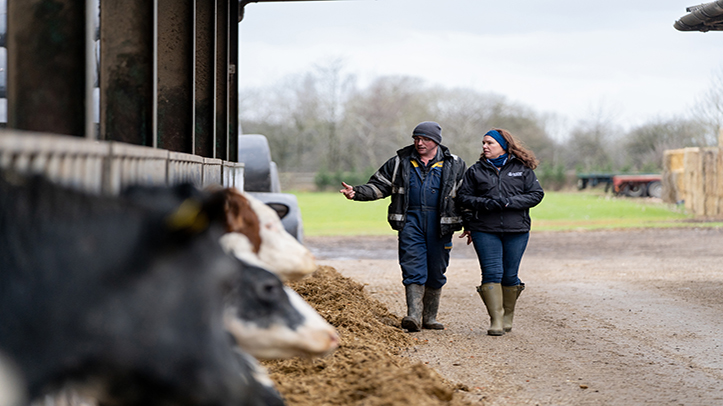
Are you having conversations with beef and dairy cattle farmers about planning their parasite control before turnout? Boehringer Ingelheim’s technical services manager Sioned Timothy offers some tips to talk to farmers about parasite control.
Proactively managing the parasite challenge cattle will face during the grazing season is the best way to support young, growing cattle to be more productive and profitable. Taking this approach may seem at first like it requires more time and intervention, but by making a few changes, and investing some time in monitoring, parasite control is the most cost-effective and sustainable way.
“Understanding which cattle are most at risk is key,” explained Ms Timothy. “Animals that are grazing for their first or second season are particularly susceptible to gutworm infections post turnout, which can have a significant negative impact on their growth, overall health, and future productivity.
“Grazing management is the simplest way to start reducing the worm burden at turnout, but this will still have its challenges.”
Before turnout, ask whether it’s possible to identify the cleanest grazing out of the land available. These could be fields that haven’t been grazed for 12 months or more, newly established leys, fields used for hay or silage last year, or fields that were only grazed by sheep over the past 12 months.
“This cleaner grazing will have very low levels of worm larvae and should be prioritised for calves and any young cattle entering their first or second grazing season. By reducing exposure to infective gutworm larvae, it lessens the likelihood of high worm burdens in cattle before mid-summer,” explained Ms Timothy.
Regular pooled faecal egg counts (FECs) can help manage pasture contamination and aid decision making. By tracking FECs every few weeks following turnout, farmers can avoid unnecessary treatments, before calves are infected, but also ensure they do treat them before the pasture becomes heavily infected.
Eggs shed onto the pasture early in the grazing season will build up, resulting in peak contamination in mid-summer, which can cause outbreaks of scouring. Tracking the level of eggs shed onto specific fields can help inform decisions on grazing management later in the summer.
“Ask your customers about the possibility of moving their younger animals to lower-risk pastures later in the season. Silage or hay aftermath is ideal. This can help to reduce overall worm burdens,” said Ms Timothy.
“There will be farms that have quite restricted grazing available. This can make pasture management for parasite control more difficult, but it is still possible.
“In these cases, its useful to remember that in general, adult cattle will have developed immunity to gutworms and are at lower risk of acute parasitic disease. Younger cattle should be given priority to cleaner pastures.”
For farms that have the labour and facilities to handle youngstock through the grazing season, weight tracking can be informative.
Weighing calves and youngstock before turnout will give a baseline to compare their performance against. Tracking average daily liveweight gains through the grazing season, particularly the second half when subclinical and clinical disease is most likely to occur, can help identify individual animals that could benefit from a worm treatment later in the summer.
“Remember, it’s not always necessary to worm the whole group,” Ms Timothy stressed. “Consideration should be given to leaving a proportion of young cattle meeting growth targets untreated.”
This targeted approach to treatment during the grazing season reduces overall wormer use and retains some worms ‘in refugia’ in untreated animals, helping to lower the risk of wormer resistance.
“Sometimes it can be a hard concept to get across, especially where farms have been routinely worming the whole herd each time. Starting by encouraging farmers to leave just a few animals untreated can be a good way to trial this approach, building on this in subsequent seasons,” Ms Timothy said.
When suggesting an approach that potentially results in less wormer being used overall, its important to be confident that all treatments administered will be as effective as possible.
Recommending wormer brands that have been tried and tested by farmers for decades, with continued efficacy, is one way to support any new approach to parasite control. Brands like IVOMEC Classic Pour On, and EPRINEX Pour-On offer proven treatment and protection against reinfection with the most pathogenic gutworm species which affect young, growing cattle.
Finally, Ms Timothy suggested that it’s important to keep in mind the application technique.
“It’s a good idea to ask your customer about the condition of their wormer applicator and when it was last cleaned or tested. Providing a brief overview of how to clean and calibrate it is always appreciated. However, if there is any doubt, it’s advisable to offer a new applicator that is suitable for the wormer treatment being purchased,” she concluded.